
A few months back, I was testing one of our voice agents – the AI assistant that handles customer calls – and asked it a basic question about one of our waterfall systems. The kind of thing a customer might ask on any Tuesday afternoon.
It answered confidently. It got the price wrong by $10,000.
That’s a serious problem. A customer hears a friendly voice quote them $25,000 for something that actually runs $35,000, and now you’ve got an awkward conversation to have. Or worse, they book the job expecting that number and you have to unwind it after the fact.
The issue has a name: AI “hallucination.” I want to explain what that actually means, why it happens, and what we did to fix it – because AI accuracy is the single biggest trust question any small business needs to answer before putting an assistant in front of customers.
What an AI hallucination actually means
When an AI assistant gives you a wrong answer delivered with complete confidence, that’s a hallucination. It’s not lying. It genuinely doesn’t know it’s wrong. Most AI tools learn from enormous amounts of text and get very good at sounding plausible. “Plausible” and “accurate” are different things.
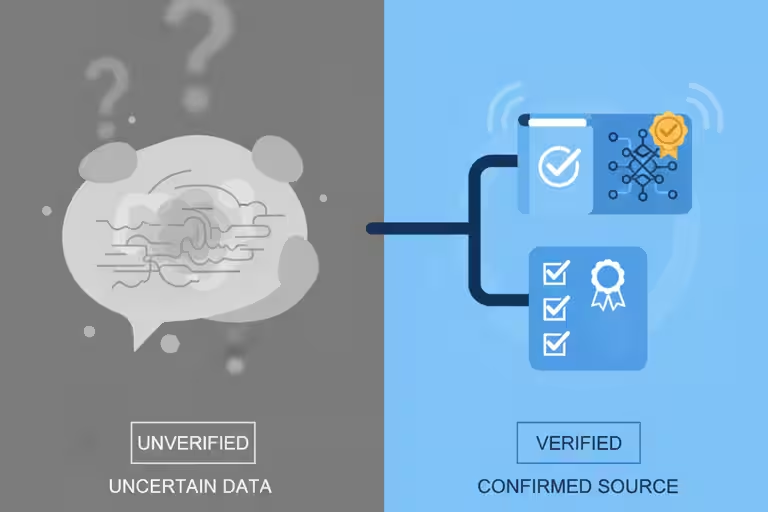
This ties back to something I have said in our AI videos: artificial intelligence is not actually intelligent in the human sense. It is very good at language. It is very good at finding patterns. That can make it sound more certain than it should.
For general questions that don’t matter much, a wrong answer is an annoyance. For a quote, a product spec, or a scheduling commitment, it’s a reputation problem.
The fix: a company knowledge base the AI checks first
Think of it this way. A new office assistant who’s never set foot in your shop might still sound knowledgeable – they’ve read a lot. But if you ask them what the current price is for a Cascade Series installation, they’ll guess based on general patterns, not your actual numbers.
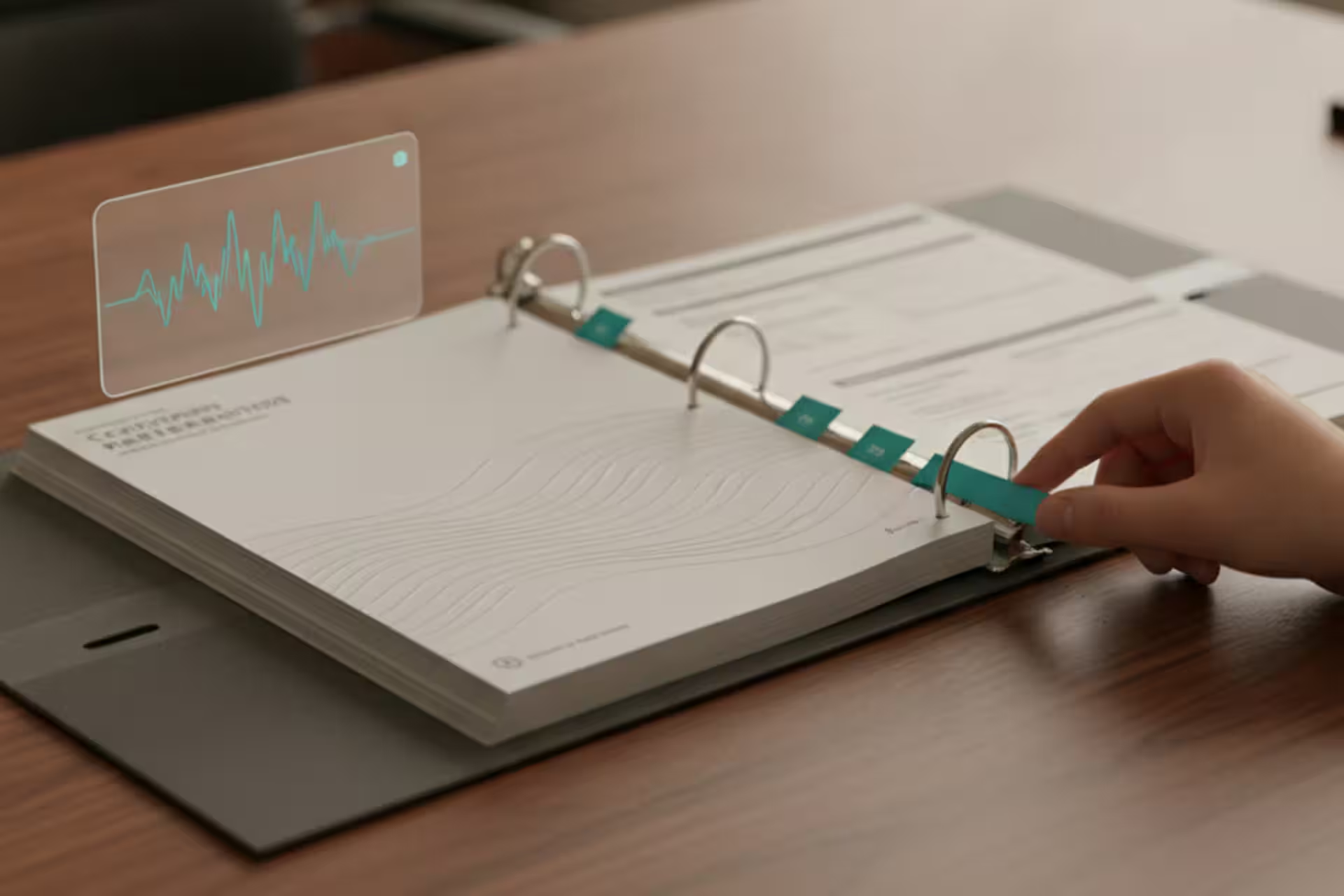
The fix is simple: give them a reference binder. Your price sheets. Your product specs. Your standard install notes. Now when someone asks about pricing, they look it up instead of guessing.
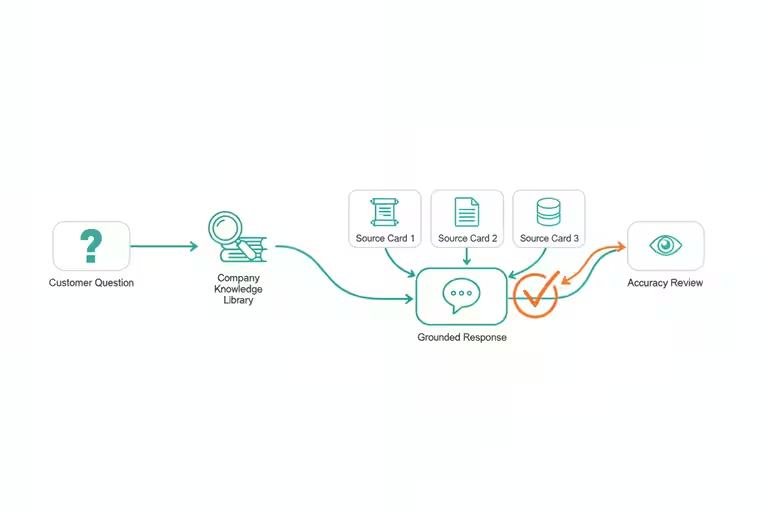
That’s exactly what we built. The technical term is retrieval-augmented generation – RAG for short. You don’t need to remember the acronym. What matters is the concept: before the AI answers a customer question, it searches a curated library of real, current company information and uses what it finds to ground its response. Think of it as giving the AI a filing cabinet of your own business to check before it opens its mouth.
We built what I’d call an encyclopedia of our operation. It covers our product catalog, pricing, common install specs, typical timelines, crew schedules. We maintain it, keep it current, and the AI reads it before it speaks.
The difference was immediate. Same AI, same voice, same friendly tone. But now when a customer asks about a Formal Series waterfall for a commercial project, the answer comes back accurate, not invented.
How accurate business data helps voice agents act
Once the knowledge base was solid, something else opened up: the voice agents could start actually acting on what they know.
I tested this last week – asked the system out loud to check a day’s schedule and drop an install job on a crew’s calendar. “Put the Henderson job on Crew 2 for Thursday.” It worked. Needed a little coaching on ambiguous phrasing, but it worked.
That’s meaningful for a service business. A crew lead who can confirm a Thursday install by talking to the phone – instead of trading texts with the office – saves real time across a week. The underlying reason it works: the AI has accurate schedule data to read and write against. Without the knowledge base, it would be guessing. And a scheduling guess that gets acted on is worse than no answer at all.
Better AI models still need your company information
The tools are getting faster and more capable. That is good news. I use them every day, and I would not be spending this much time on AI if I did not think the value was real.
But a better model does not automatically know Aquatic Artists pricing, our install process, our product differences, or the way we want to explain something to a contractor. That still requires the work we did: giving the system real information to draw from.
What a knowledge base can’t fix
The knowledge base helps a lot. It’s not a guarantee.
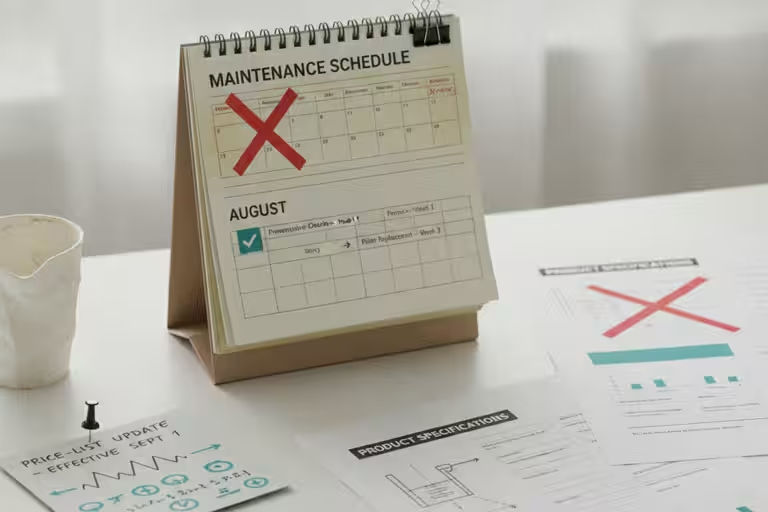
If the information in the library is out of date, the AI will give an out-of-date answer with exactly the same confidence it gives a current one. We run scheduled jobs to keep things fresh, but no automated system catches everything. Someone has to own the maintenance.
We also keep a firm rule: anything that touches a quote or a commitment to a customer gets a human check before it goes out. The AI can draft it. A person confirms it. That’s not a knock on the technology – it’s just the right call. The customer’s trust is on the line, and that’s not something to hand off entirely.
Think of it this way: the AI is a well-read assistant with your reference binder open on the desk. Faster than the alternative, genuinely useful. Still benefits from someone checking the work on the things that actually matter.
Where to start with AI accuracy
If you’re thinking about putting any AI tool in front of customers – for quotes, for scheduling, for answering service questions – ask one thing first: what does it have to read?
If the answer is “nothing specific to my business,” that’s the gap. That’s where the hallucinations come from.
The single most valuable thing you can do before deploying an AI assistant is give it a solid, current, maintained source of your own business information. It doesn’t have to be sophisticated. A well-organized set of product sheets and a current price list is a real start. From there, you build.
If you want to talk through what that would look like for your operation, reach out. The knowledge-base work is some of the least glamorous and most valuable thing we’ve done this year.