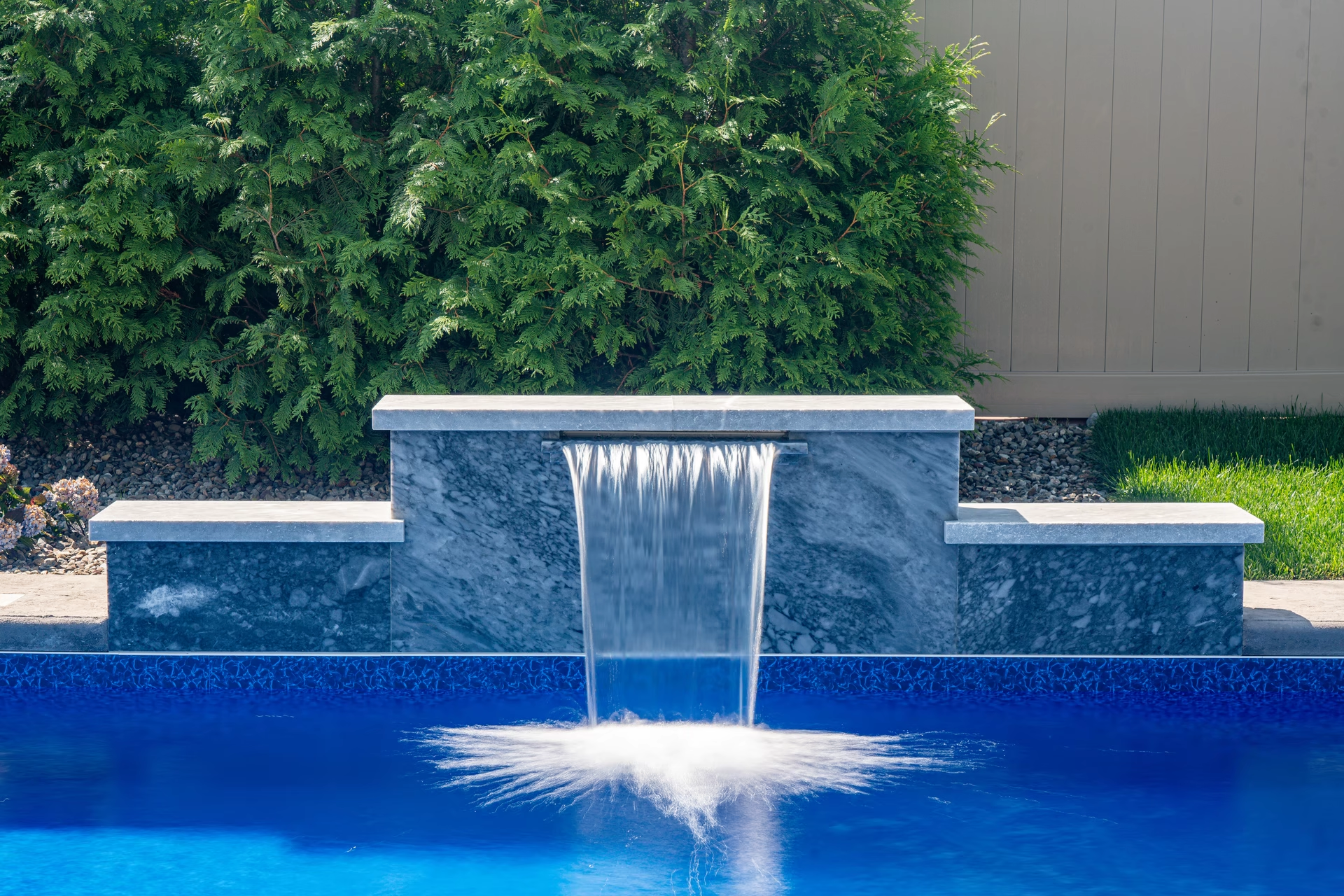
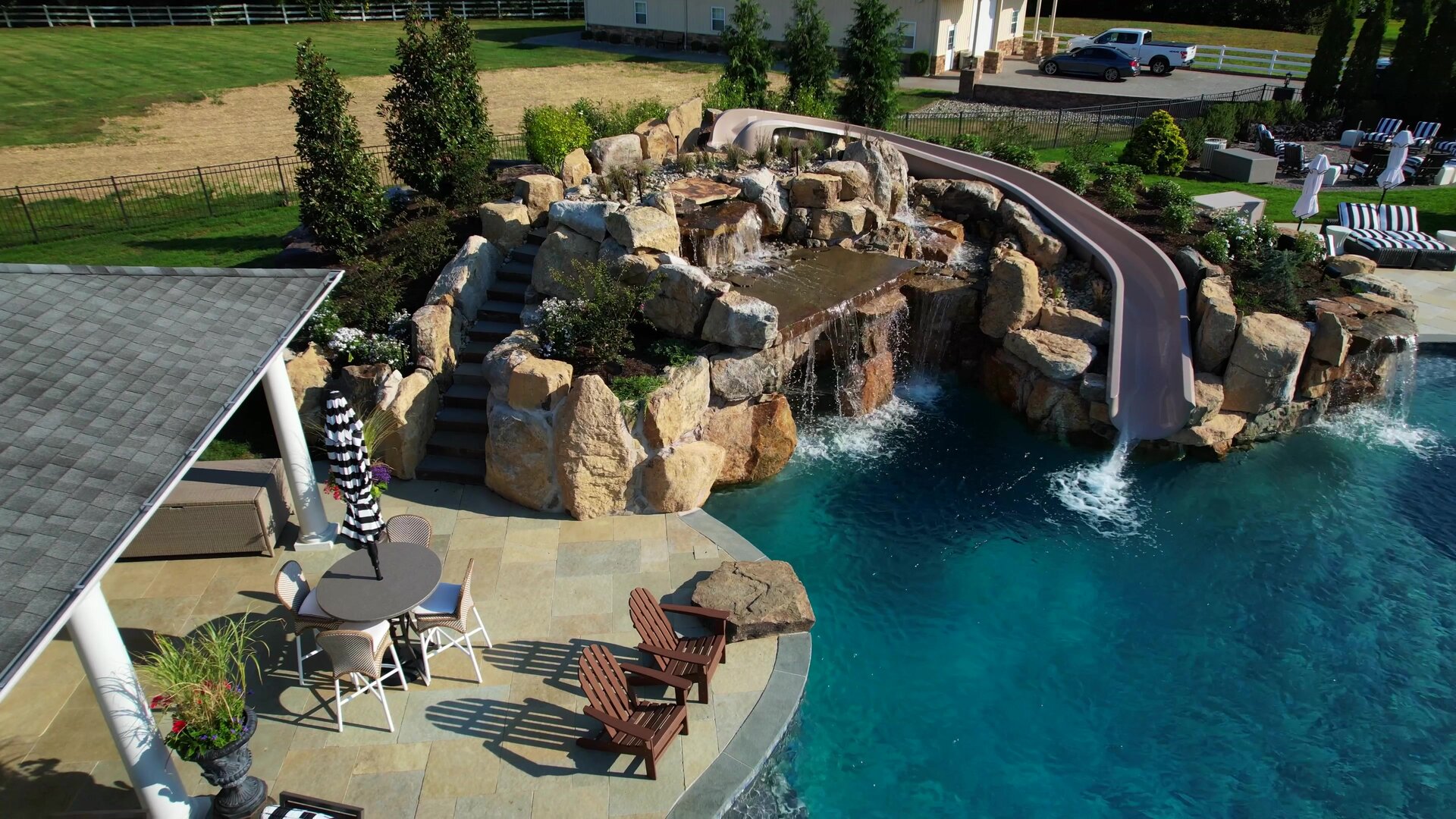

Aquatic Artists custom waterfall
Categories
Flow

Poolside Lighting: The Code

The Million Dollar Question: Lights Near Water?

We have all been taught our whole lives: water and electricity do not mix. So how on earth can a professional, totally up-to-code installation have lights sitting right there on the pool deck? It seems like it defies all the rules—but it does not.

There is a very specific modern exception in the electrical code, and at Aquatic Artists, we live by it. This is not about finding loopholes. It is about understanding a purpose-built, engineered pathway to creating beautiful, safe poolside lighting.

The Five-Foot Rule: Square One

Let us start with the fundamental rule of poolside electrical safety—something every single person involved in a pool project needs to know.

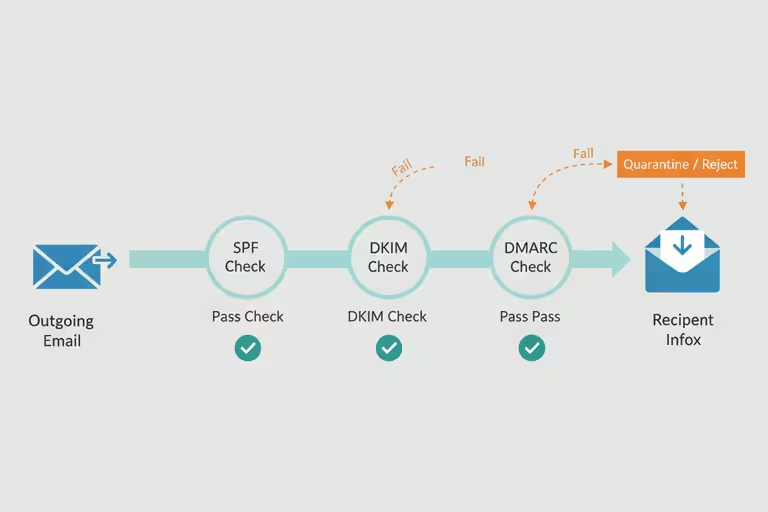
The National Electrical Code (NEC) says you need to keep most electrical gear at least five feet away from the water edge. The reason is simple: it creates a safety buffer designed to keep high-voltage equipment far away from wet people to prevent electric shock.
That is the default rule. But there is a really smart exception we are going to focus on.

NEC 680.22(B)(6): The Code Exception

This is where modern engineering and a smart electrical code come together. The NEC is not just a book of “no”—it is a roadmap for how to do things safely.

NEC 680.22(B)(6) is not a loophole. It is a purpose-built, engineered pathway. This exception says yes, you can do this—if you use a system with multiple layers of safety built right in.

Three Non-Negotiable Conditions

For this exception to apply, you must meet three conditions. No exceptions:

  1. The light fixture must be officially listed as not requiring grounding (UL 1838 listed)
  2. The whole system must be super low voltage—15 volts AC or less
  3. It must be powered by a listed UL 379 isolating transformer—this is the real heart of the safety system

The Magic of Isolation: Why It Works

Not all low-voltage transformers are created equal—not by a long shot. If you are working inside that five-foot zone, you need a special kind of transformer that does one thing incredibly well: it isolates the entire circuit.

A normal transformer might actually have a connection between the high-voltage side and the low-voltage side. But a UL 379 isolating transformer is built differently. The wires for the high-voltage and the low-voltage are physically and electrically separate. There is literally no direct path between them.

The Electrical Air Gap

Think of this as an electrical air gap. It totally severs the 120-volt power from your house from the low-voltage system lighting your pool. This means the low-voltage side is essentially floating—it has no connection to the earth ground.

What does that mean in the real world? Even if something goes wrong, the electricity has no path to travel through a person to the ground to cause a shock. It is an amazing built-in safety feature.

The Fixtures: Why Metal Is Actually Safe

This is where people get nervous—especially when they see lights with metal parts so close to the water. We are taught that any metal near a pool needs to be bonded to prevent stray voltage, right?

So when you see a metal light fixture sitting on the pool deck that is not bonded, it can look really wrong. But here is why it is actually perfectly safe.

UL 1838 Listed Fixtures

When a fixture has that special UL 1838 listing, it means it has been engineered and tested to be safe with a metal body without needing a safety ground. How is that possible?

  • Double insulated: At least two layers of protection between any live electrical parts and the metal you can touch
  • UL certified: Specifically listed as not requiring a ground wire
  • Current limited: The special transformer caps how much energy can flow if something goes wrong

And let us not forget the final layer of safety: the super low voltage. At 15 volts AC or less, the system is running at a level that the NEC considers to be below the serious shock hazard level for people in wet areas.

The Complete Safe System

You have got three things working for you: an isolated circuit, double-insulated lights, and extremely low voltage. It is a complete system designed for safety from the ground up.

The Final Checklist

This is what Aquatic Artists lives by:

  1. UL 1838 listed fixture that says “no grounding required”
  2. UL 379 isolating transformer
  3. Whole system runs at 15 volts AC or less
  4. Everything installed exactly like the manufacturer specifies

You nail these four points, and you have got a perfectly safe and legal installation.

Safety and Style, Hand in Hand

At Aquatic Artists, our work is all about that perfect blend of knowing the electrical code inside and out while having that creative, artistic eye. A deep understanding of the rules is what lets us safely build these incredible backyards that people dream about.

So the next time you see a pool lit up like a resort, you will know the secret. It is not magic—it is just smart engineering and following the code. Safety does not have to limit beautiful design. In fact, when you do it right, it is what makes it possible.

Categories
Flow

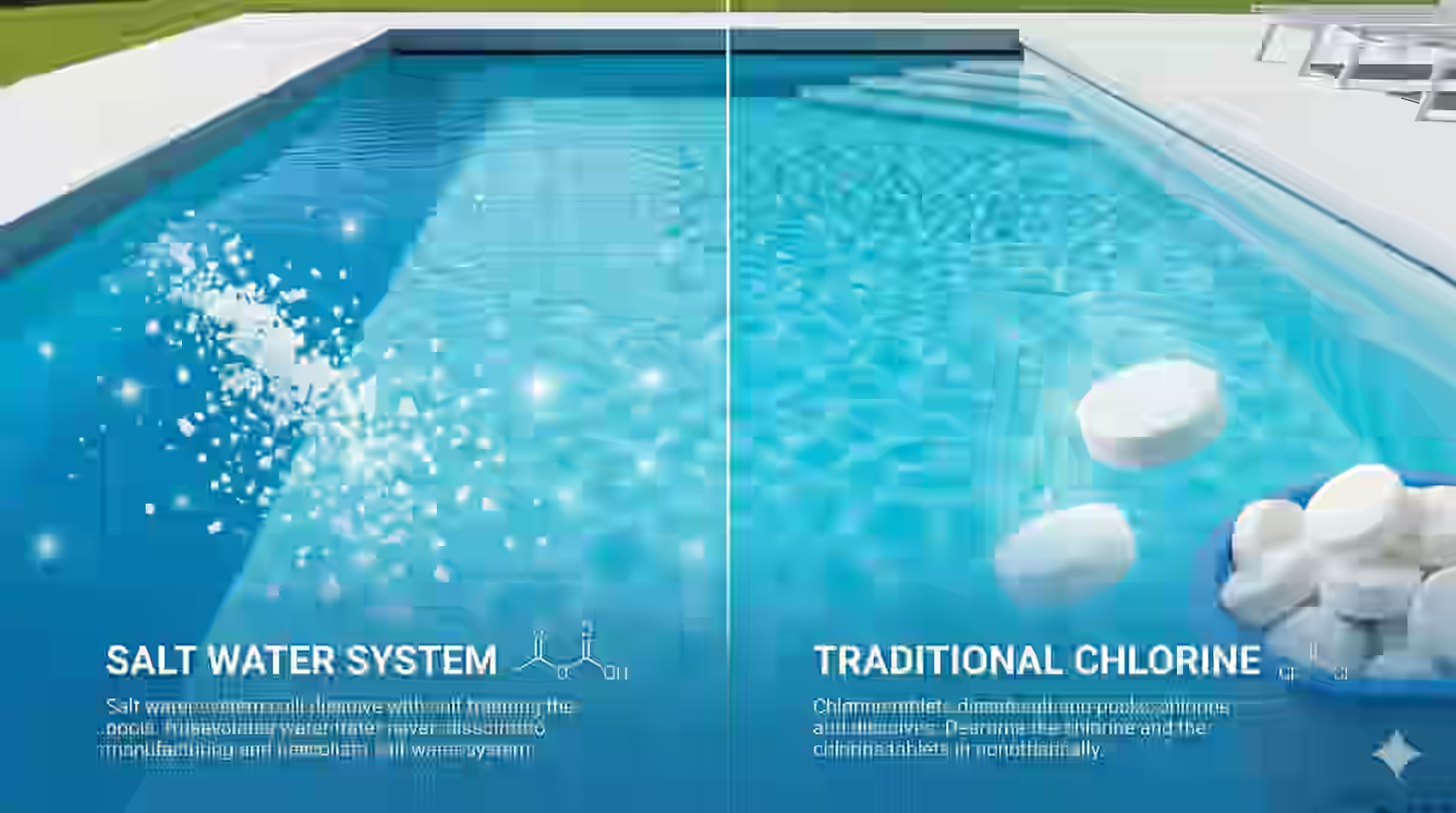
Salt Water vs Chlorine: The Truth About Pool Sanitization

Salt Water Pool = Chlorine-Free Pool? Think Again.

So you are thinking about getting a pool or maybe upgrading the one you have, and you keep hearing about salt water this and salt water that. It can get super confusing, right? There are so many myths floating around.

Today we are going to clear the water on this whole debate: salt water versus good old-fashioned chlorine.

The Biggest Misconception

Let me ask you a question straight up: when you hear “salt water pool,” what is the first thing you think? Your gut reaction is probably that it is a chlorine-free pool. Right? I mean, it is in the name.

Spoiler alert: it is not chlorine-free. Not even a little bit.

Honestly, “salt water pool” is probably one of the most misleading names out there. A salt water pool is a chlorine pool. The big difference—the big twist—is not about getting rid of chlorine. It is about making it in a smarter way.

How Salt Water Chlorine Generators Work

It all comes down to a really clever piece of tech called a salt water chlorine generator, or SCG for short. Think of this thing as the heart of the whole system.

It takes regular old salt (sodium chloride)—just a pure version of what is on your dinner table—and uses a tiny bit of electricity to create fresh, pure chlorine on demand right in your own pool.

The Process, Simplified

  1. You dissolve some special pool-grade salt right into the water
  2. As that slightly salty water gets pumped through the generator, it passes through something called a cell
  3. Inside that cell, a process called electrolysis zaps the salt, splitting it apart and creating brand new chlorine

It is literally like having your own little chlorine factory working 24/7 to keep your pool perfectly clean.

Busting the Saltiness Myth

If you are dumping all this salt in your pool, does that mean your backyard is going to feel like a trip to the beach? Are you going to get that stinging eye, super salty taste experience?

The answer is a huge NO. It is not even close.

The Numbers Tell the Story

  • Ocean water: About 35,000 parts per million (ppm) of salt
  • Salt water pool: Just 3,000 ppm
  • Your own tears: Actually three times saltier than a salt water pool!

Here is the kicker: most people cannot even taste salt in water until it hits about 3,500 ppm. Pool operators keep salt water systems running just below that level on purpose. So for most people, you will not taste any salt at all—you just feel this soft, fresh water on your skin.

Salt Does Not Sanitize

Here is the other myth we have to bust for good: the salt itself is not what cleans your pool. It has no sanitizing power.

Think of it like this: salt is the fuel, and the chlorine generator is the engine. The engine uses the fuel to create the power (in this case, chlorine), which is what actually does all the heavy lifting and keeps your pool sparkling clean.

Why People Love Salt Water Pools

So if it is not about being chlorine-free, and it is not like swimming in the ocean, why do so many people just rave about their salt water pools?

It really all comes down to the experience:

  • Softer water: The number one thing you will hear is that the water just feels softer, almost silky on your skin
  • Gentler on eyes and hair: Because the chlorine is being made constantly and consistently, you do not get out feeling all dry and itchy
  • No harsh pool smell: That smell is not actually chlorine—it is a byproduct called chloramines, which salt systems minimize
  • No chemical handling: Say goodbye to buying, hauling, or handling heavy buckets of chlorine tablets or jugs of liquid chlorine

Once you get used to that soft feel of a salt water pool, going back to a traditionally chlorinated one can feel… well, pretty harsh. That comfort factor is a massive deal for people.

Which System Is Right for You?

Look, it really boils down to your priorities.

Choose Salt Water If:

  • That softer, gentler swim experience is number one for you
  • You hate the idea of handling chlorine
  • You are okay with a bigger investment upfront for way more convenience down the road

Choose Traditional Chlorine If:

  • A lower initial cost is your top priority
  • You really do not mind the weekly routine of testing your water and adding chemicals yourself

Cost Comparison

Your upfront cost for salt water is definitely higher because you have got to buy that generator. But your ongoing costs are much lower—just a few bags of inexpensive salt per year.

With traditional chlorine, the setup is cheaper, but you are signing up for years of buying pricey chlorine tablets or liquid.

The one big maintenance item to remember for salt systems is that the generator cell will need to be replaced every few years—and that is a pretty significant expense to plan for.

The Bottom Line

Now you know the real story. The question you have got to ask yourself is: what is more important for your perfect backyard oasis? Is it saving money on day one, or is it investing in years of daily comfort and convenience?

Whether you choose salt or traditional chlorine, nothing takes a pool to the next level like an amazing water feature. If you are in New Jersey, Pennsylvania, Delaware, or Maryland, the team at Aquatic Artists are masters at designing incredible custom waterfalls and grottoes that look amazing with any pool system.

Categories
Flow

Pool Bonding

The Invisible Danger: Why Pool Bonding Matters

At Aquatic Artists, we truly believe that safety is not just some item on a checklist—it is the absolute foundation of everything we build. And that all starts with understanding why bonding is non-negotiable.

Your backyard has pumps, lights, and all sorts of electrical equipment running. Tiny, undetectable amounts of voltage can leak into the ground, the water, or even metal parts like a ladder. This is what the National Electrical Code (NEC) calls voltage gradients—and it is a very real hazard.

Without bonding, if you touch that ladder while standing on wet concrete, you could literally become the easiest path for that electricity to travel. That is exactly the danger we are here to prevent.

Bonding vs. Grounding: What is the Difference?

This is probably one of the biggest points of confusion, so let us clear it up:

  • Grounding is for when something goes catastrophically wrong. It gives a huge surge of electricity a path to the earth to trip a breaker.
  • Bonding is different—it is a preventative measure. It connects everything metallic together (the ladder, the light, the pump) so they are all on the same electrical team.

If there is no difference in voltage between them, there is no way you can get a shock. For pools, bonding is your number one line of defense.

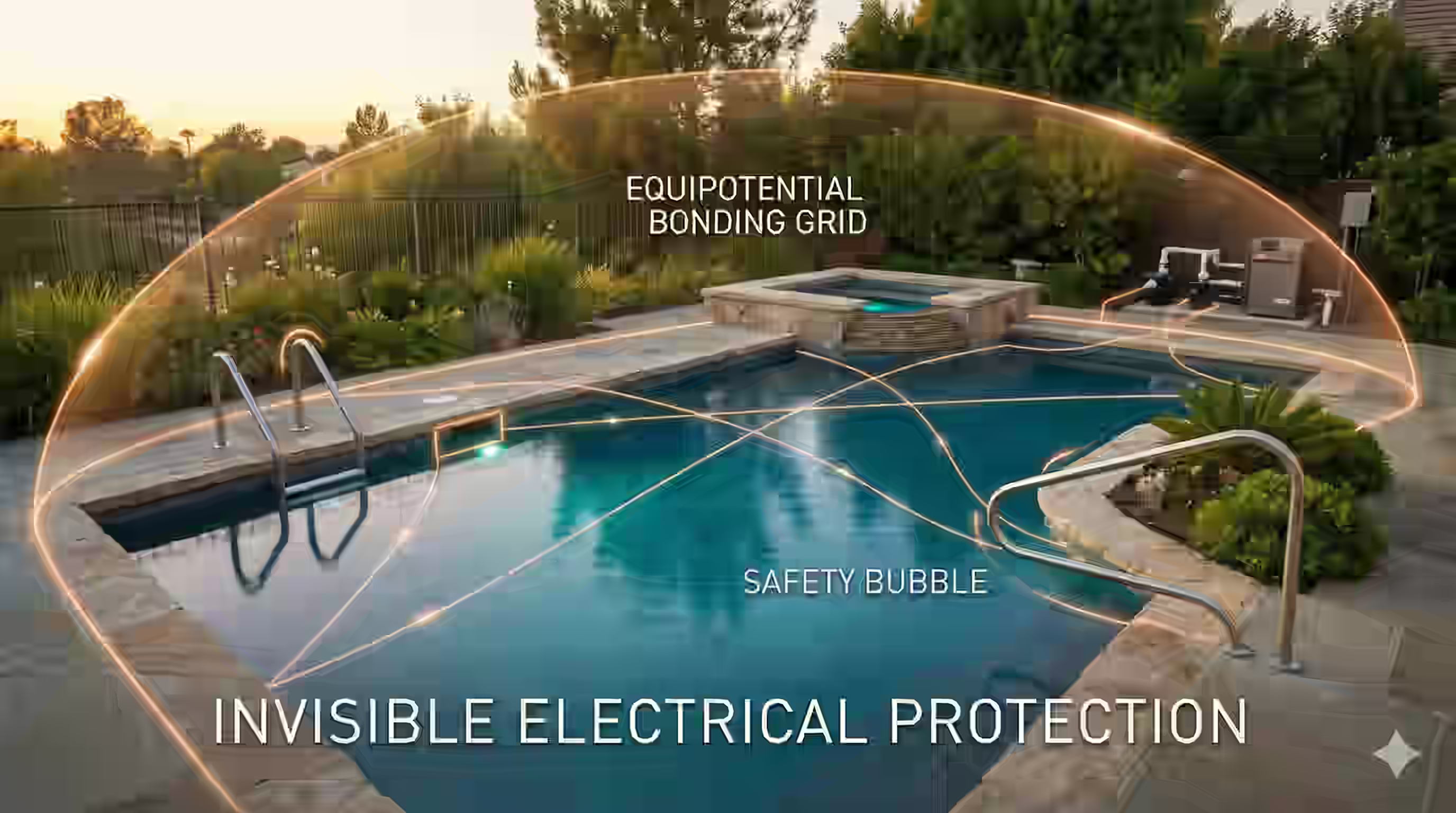
The Equipotential Grid: Your Pool’s Safety Bubble

The equipotential bonding grid is basically a web of heavy-duty bare copper wire—we are talking #8 gauge, thick stuff. Its entire job is to physically link up all the metal parts in and around your pool, putting them all at the exact same electrical potential.

Think of it this way: its mission is to create an invisible safety bubble. Inside this bubble, every single conductive surface—the water, the handrail, the wet deck—is at the same voltage. You can touch all of them at once, and because there is no difference, there is no path for electricity to travel through you.

It is an incredibly simple concept that has life-saving results.

The NEC Bonding Checklist (Section 680.26)

The National Electrical Code gives us a clear checklist of what must be connected to the safety bubble:

1. Pool Structure

  • Concrete pools: All steel rebar inside the shell must be connected
  • Fiberglass pools: A copper grid must be installed around the pool
  • The deck surface must be bonded in a 3-foot perimeter all the way around the pool

2. Metal Parts You Can Touch

  • Anchors for ladders and handrails
  • Metal drain covers or fittings 4 inches or larger
  • Metal frames for diving boards or slides
  • Metal housing (niche) for underwater lights

Rule of thumb: If it is metal and it is part of the pool, it gets connected.

3. The 5-Foot Zone

The safety bubble extends beyond the water. Any fixed metal part within 5 feet horizontally of the inside edge of the pool must be tied into the bonding grid, including:

  • Metal fences
  • Aluminum window frames
  • Metal downspouts

4. Equipment and Water

  • Metal cases for pumps and heaters (exception for double-insulated equipment)
  • The pool water itself—bonded using a special metal fitting with at least 9 square inches of surface touching the water

Pool Lighting: The Rules

Pool lighting rules are extremely specific because you have electricity and water right next to each other—there is zero room for error.

120-Volt Lights

The metal housing must be bonded to the grid. Period. No exceptions.

Low-Voltage Lights (The Exception)

Certain approved low-voltage lights do not need to be bonded—but only if they meet ALL three conditions:

  1. The light must be officially listed as not needing a ground
  2. It must operate at very low voltage (around 15 volts)
  3. It must be powered by a special listed isolating pool transformer

Important: This is not a loophole—it is a completely separate engineered safety system. The safety comes from the system design: that special transformer isolates the power, and the voltage is so low it simply cannot become a shock hazard.

You cannot just grab a standard landscape light and hope for the best. At Aquatic Artists, this is a zero-tolerance issue for us. We only install systems that are specifically designed and listed for this critical application.

The 5 Golden Rules for Pool Safety

Proper bonding is not an add-on or an upgrade—it is the invisible framework of safety that has to be there from day one. Remember these five key points:

  1. Bonding equalizes voltage to prevent shock
  2. #8 copper wire is the backbone of your safety bubble
  3. Everything within the 5-foot zone gets connected
  4. Low-voltage lights are a strict exception, not a shortcut
  5. Never assume—always check the latest code and talk to a qualified professional

Is Your Pool’s Safety Bubble Complete?

Proper electrical bonding is the silent, unseen guardian of your pool. Now that you know the rules of the game, take a second to consider: is your pool’s safety bubble complete?

If you have questions about pool bonding or want to ensure your pool meets current electrical codes, contact Aquatic Artists today.

Categories
Flow

New Jersey Launches Water Safety Strategy

New Jersey Launches Water Safety Strategy

Here at Aquatic Artists, we’re passionate about creating beautiful water features, but even more so, we’re dedicated to ensuring everyone can enjoy the water safely. That’s why we’re thrilled to highlight a monumental step forward for water safety in our home state of New Jersey.

On June 17, 2025, New Jersey launched its first-ever state-specific Water Safety Strategy at the Salvation Army Kroc Center in Camden. This comprehensive plan makes New Jersey only the third state in the US to implement such a strategy, solidifying its position as a leader in water safety initiatives.

Six Pillars of Progress

The New Jersey Water Safety Strategy is built upon six essential pillars, each crucial to creating a safer aquatic environment for all residents and visitors:

  • Data Consolidation: Gathering and analyzing water-related incident data to identify trends and areas for improvement.
  • Public Awareness: Educating the public about water safety risks and preventative measures.
  • Drowning Prevention: Implementing programs and initiatives to reduce the incidence of drowning.
  • Lifeguard Training: Enhancing the training and certification of lifeguards to ensure they are equipped to respond effectively.
  • Sustainable Funding: Securing dedicated funding sources to support ongoing water safety efforts.
  • Collaboration: Fostering partnerships between government agencies, non-profit organizations, and community stakeholders.

These pillars represent a holistic approach to water safety, addressing everything from data collection to public education and emergency response. By strengthening each of these areas, New Jersey is paving the way for a future where everyone can enjoy the water with confidence and peace of mind.

Why Water Safety Matters

Water-related incidents can have devastating consequences. Drowning remains a leading cause of unintentional injury death, particularly among children. By prioritizing water safety, New Jersey is taking proactive steps to protect its citizens and prevent tragedies.

As a waterfall building company, Aquatic Artists understands the allure and power of water. We believe that everyone deserves the opportunity to experience the joy and relaxation that water features can bring. But that enjoyment must be balanced with a commitment to safety.

We applaud New Jersey for taking this vital step and are proud to support the state’s Water Safety Strategy. We encourage everyone to learn more about water safety and take the necessary precautions to protect themselves and their loved ones. Learn more and get involved at the NESPA and NJSSA websites.

Aquatic Artists’ Commitment

Aquatic Artists is committed to promoting safe water enjoyment through responsible design, construction, and education. We incorporate safety features into all of our water features and provide our clients with comprehensive guidance on water safety best practices. We are dedicated to working with our community to raise awareness about water safety and help prevent accidents.

Visit the NESPA website to learn more about the New Jersey Water Safety Strategy and how you can get involved!

In Summary

New Jersey’s launch of its first-ever state-specific Water Safety Strategy is a significant milestone in promoting safer water enjoyment. Built on six essential pillars—data consolidation, public awareness, drowning prevention, lifeguard training, sustainable funding, and collaboration—this strategy aims to reduce water-related incidents and fatalities. Aquatic Artists fully supports this initiative and encourages everyone to prioritize water safety.

Categories
Flow

May is Water Safety Month – Make Every Swim a Safe One!

May is National Water Safety Month! We want to take a moment to reaffirm what’s at the heart of everything we do: safety.

At Aquatic Artists we believe that every pool should be a place of fun, enjoyment, and most importantly – safety. That’s why we follow industry best practices, promote responsible pool ownership, and support year-round water safety awareness.

We’re proud members of the Northeast Spa & Pool Association (NESPA), which through the NESPA Foundation, actively supports organizations like:

2025-05-01 NESPA Water Safety Badge

These nonprofit partnerships work tirelessly to provide swim lessons for children, promote

lifesaving water safety education, and make a real difference in communities just like ours.

How You Can Help:

  • Talk to your family about water safety
  • Make sure your pool is secure and properly maintained
  • Support organizations bringing swim lessons to those in need

Wishing you a safe and enjoyable start to the season!

Categories
Flow

Genesis Waterfall Kits: The Origin of Natural Stone Waterfall Kits

Genesis Waterfall Kits. Natural stone waterfall kits displayed on a swimming pool

At Aquatic Artists, we have spent over 20 years perfecting the art of building breathtaking water features. Now, we’re thrilled to introduce a major innovation: Genesis Waterfall Kits — the first natural stone waterfall kits designed to be installed easily, affordably, and beautifully.

If you’re a homeowner dreaming of a backyard waterfall or a contractor looking for a profitable and hassle-free product, Genesis Waterfall Kits are the solution you’ve been waiting for.

Why We Created Genesis Waterfall Kits

As our reputation grew, we received more and more calls from homeowners and contractors who wanted the beauty of a natural waterfall — but at a lower price point. Traditionally, custom waterfalls start at around $10,000, making them out of reach for many.

We asked ourselves:
What if we could create high-quality Natural Stone Waterfall Kits that could be sold for $5,000 to $6,000 — installed by two people in just a few hours, with no specialized equipment?

After years of research, design, and testing, Genesis Waterfall Kits became a reality.

What Sets Genesis Waterfall Kits Apart?

Unlike traditional fiberglass or cast concrete kits that fade, leak, and look manufactured, Genesis Waterfall Kits are built from real natural stone and designed by master project managers. Each kit features:

Guth A - Mullica Hill, NJ - A swimming pool with a waterfall in the middle of it surrounded by grass and trees

  • Authentic natural stone for unmatched beauty and durability
  • Pre-assembled and tested for flawless water flow and zero leaks
  • Video and photo documentation so customers can select the exact kit they want
  • Palletized shipping available nationwide
  • Simple installation — no special skills, no heavy equipment required
  • Low maintenance — built to withstand the elements without fading or cracking

Every Genesis Waterfall Kit is assigned a unique kit number and individually staged, tested, and recorded, ensuring complete transparency and customer satisfaction.

Two Styles of Genesis Waterfall Kits

We designed Genesis Waterfall Kits to meet the needs of any outdoor space:

  • Genesis Natural Waterfall Kits: Crafted with real boulders for a natural, organic look that complements pools and natural landscapes.

    Genesis M -  - A water feature in a swimming pool surrounded by plants and rocks

  • Genesis Formal Waterfall Kits: Featuring lightweight marine-grade aluminum frames finished with luxurious stone veneers for a sleek, modern aesthetic.

    Dune A - Brigantine, NJ - A natural stone waterfall with an LED waterfall and fire bowls next to a pool.

Both styles can transform your backyard into a serene oasis and deliver the tranquil sound of a waterfall.

Genesis Waterfall Kits are engineered to be frictionless from the ordering process through installation. They are at an attractive price point that makes them accessible to many homeowners.

Standalone Natural Stone Waterfall Kits

Don’t have a pool? No problem. Genesis Standalone Waterfall Kits come complete with everything needed: a hidden basin, a submersible pump, plumbing, and easy-to-follow instructions. Simply bury the basin, connect the pump to a standard GFCI outlet, and enjoy your own natural stone waterfall in any backyard.

These standalone Natural Stone Waterfall Kits are perfect for patios, gardens, courtyards, or anywhere you want the peaceful sound of cascading water.

Why Choose Genesis Waterfall Kits?

  • 100% Real Stone: Authentic beauty that fiberglass and concrete can’t match
  • Nationwide Shipping: Delivered directly to your door
  • Proven Designs: Built and tested by Aquatic Artists’ master craftsmen
  • Simple and Fast Installation: No need for heavy machinery
  • Unmatched Durability: Built to last for decades

If you want more information Contact Us or visit www.genesiswaterfalls.com.

Categories
Flow

Free AI Tools – ComfyUI and Flux

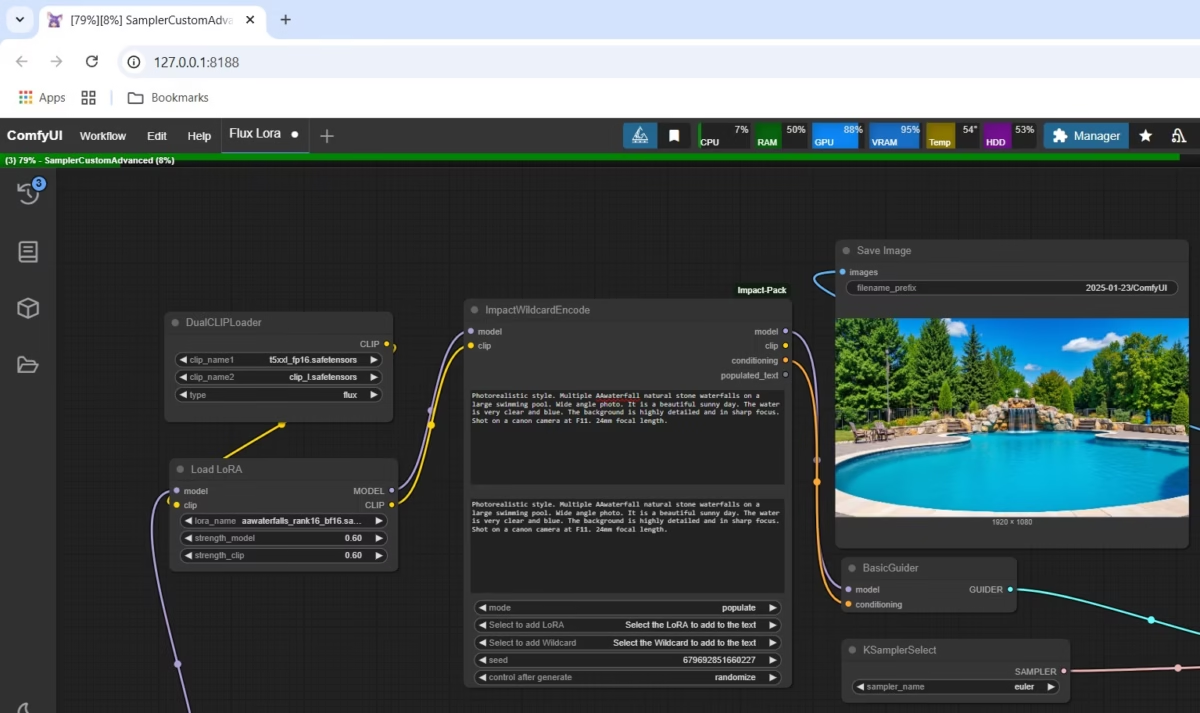
ComfyUI and Flux example showing a natural stone waterfall being generated.

One tool we’re using for generating AI images is ComfyUI. It’s an open-source, node-based graphical interface that simplifies the process of generating images using advanced AI models. Its modular design allows users to create complex workflows by connecting various functional blocks, known as nodes, each representing specific tasks such as loading models, entering prompts, or applying filters. This flexibility enables both novices and professionals to tailor their image generation processes to their specific needs.

A standout feature of ComfyUI is its seamless integration with cutting-edge models like Flux, developed by Black Forest Labs. Flux is renowned for its exceptional capabilities in text-to-image generation, producing high-quality, photorealistic images from textual descriptions. It excels in rendering complex compositions and intricate details, including human hands and textual elements within images—areas where many other models often struggle. It’s a free model that integrates with ComfyUI. It also has the ability to be trained on user provided datasets. This is the tool we used for the AI generated Aquatic Artists waterfalls.

ComfyUI, in conjunction with the Flux Dev model, offers a powerful and user-friendly solution for generating high-quality images from text descriptions. Its modular design and integration capabilities make it a valuable tool for artists, designers, and AI enthusiasts seeking to explore the frontiers of AI-generated imagery. It’s a versatile platform, capable of adapting to the evolving landscape of AI-driven image synthesis. We’ve used ComfyUI with other models to create videos and backgrounds. There are even models to clone voices and generate music.

If you want to try it out and don’t have a high end graphics card, you can spin up a node on Vast AI. Vast let’s you rent computer power for running AI tasks. For about 80 cents an hour you can rent a decent machine in a completely isolated virtual environment that will let you play around with ComfyUI and Flux. Below are two preconfigured templates that have ComfyUI and Flux already installed.

Standard:
https://cloud.vast.ai/?ref_id=182186&creator_id=182186&name=AA%20ComfyUI%20Flux%20(cuda12.1%2Ctorch2.5.1%2Cpy3.11)

Uncensored:
https://cloud.vast.ai/?ref_id=182186&creator_id=182186&name=AA%20ComfyUI%20Flux%20Uncensored%20(cuda12.1%2Ctorch2.5.1%2Cpy3.11)

*These are affiliate links and we may be compensated if you buy something through these links.

Once the instance launches, click on Instances and then Open. It can take up to 15 minutes for the machine to launch and download the models. After it’s set up, click on Open and then on the Instance Portal click on ComfyUI. Describe what you want to create and then hit the play button to generate it. If you have any questions leave a comment below.

Check out the developer sites for more information.
ComfyUI: https://www.comfy.org/
Flux: https://blackforestlabs.ai/


Categories
Flow

Aquatic Artists AI Journey

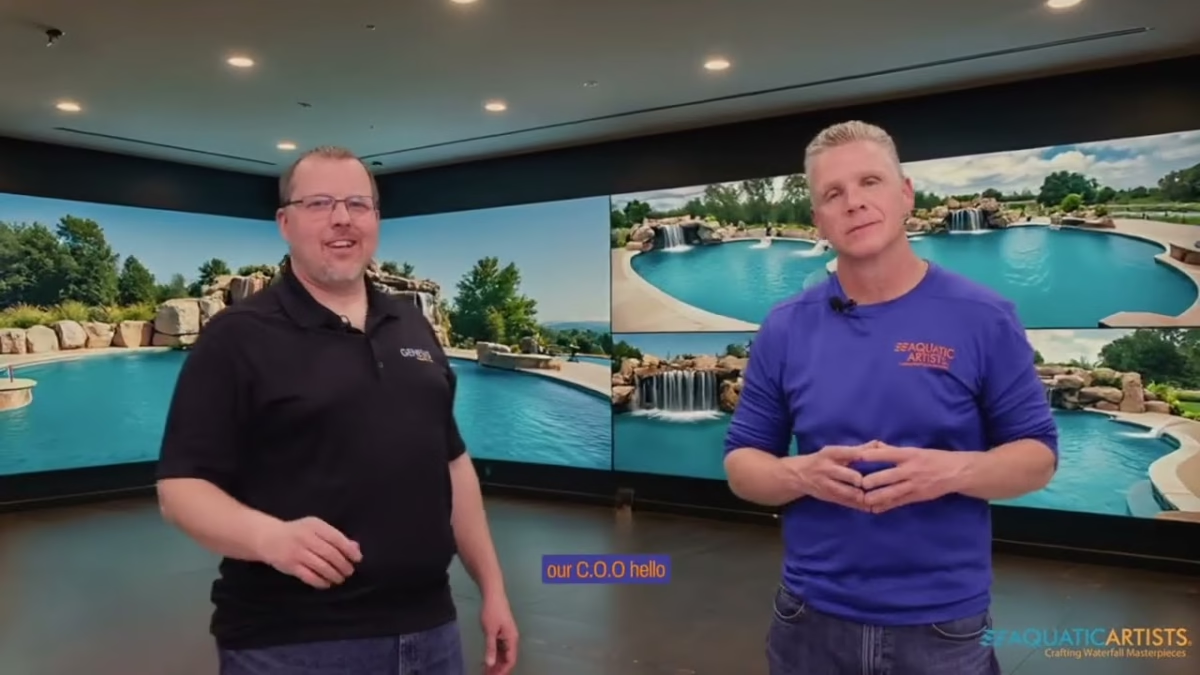
Chuck and Kevin discuss how Aquatic Artists is beginning to incorporate AI to make the company more efficient. How does a natural stone waterfall company use AI? Stay tuned for more details about our journey.

Categories
Flow

Wampler Project Highlight

This episode features a project in Hamilton, NJ where Aquatic Artists crafted this custom formal waterfall on this vinyl pool.

Full project details – https://aquaticartists.com/wampler-hamilton-nj/

For more information, please contact Aquatic Artists at 888-WATRWIZ (928-7949) or through our website at aquaticartists.com.

Categories
Flow

Aquatic Artists Growth

Chuck and Kevin discuss the growth of Aquatic Artists in this video and how the paths we take in life are not the ones we start out on.

Categories
Flow

Guth Installation

Check out this video where Chuck discusses the installation of a Formal Genesis shippable waterfall kit. These waterfall kits enhance any backyard. 

For more information, please contact Aquatic Artists at 888-WATRWIZ (928-7949) or through our websites at aquaticartists.com and www.genesiswaterfalls.com.

Categories
Flow

Hartman Install

In this video the Aquatic Artists Craftsman installed a Genesis natural stone shippable waterfall kit in Douglasville, PA.

For more information, please contact Aquatic Artists at 888-WATRWIZ (928-7949) or through our websites at aquaticartists.com or www.genesiswaterfalls.com.

Categories
Flow

2025-01-29 AC Pool Show

Chuck live from the 2025 NESPA Pool & Spa Show in Atlantic City. Please visit us at booth #3411.

Categories
Flow

2025-01-28 AC Pool Show

Chuck live from the 2025 NESPA Pool & Spa Show in Atlantic City.

Categories
Flow

Getting Ready for the Show

Chuck discusses how we are getting ready for the NESPA Pool & Spa Show in Atlantic City on January 28th-30th. Please visit us at booth #3411 to learn about all of our products, including our new shippable Genesis line! With our expanded product lines, we truly have something for everyone!

Categories
Flow

Come See Us at the 2025 AC Pool Show

If you are attending the NESPA Pool & Spa Show in Atlantic City on January 28th-30th, please visit us at booth #3411 and say hi to Chuck & Kevin! This is an excellent opportunity to learn about all of our products, including our new shippable Genesis line! With our expanded product lines, we truly have something for everyone!

For more information, please contact Aquatic Artists at 888-WATRWIZ (928-7949) or through our website at aquaticartists.com.

Categories
Flow

Innovations

In this video, Chuck highlights 5 new innovations currently being developed by Aquatic Artists.

For more information, please contact Aquatic Artists at 888-WATRWIZ (928-7949) or through our website at aquaticartists.com

Categories
Flow

Edgar Doll Slackin

It can be hard to find good help.

Categories
Flow

Jet Ski Action Highlights

Not every day at Aquatic Artists is about rocks and waterfalls. Sometimes we get a little crazy. Check out the highlights of some fun we recently had. 🤣

For more information, please contact Aquatic Artists at 888-WATRWIZ (928-7949) or through our website at aquaticartists.com

Categories
Flow

Jet Ski Backflips Episode 2

Watch Chuck’s idea become a reality as Parker does three backflips on his Jet Ski in the pool. 😮

For more information, please contact Aquatic Artists at 888-WATRWIZ (928-7949) or through our website aquaticartists.com

Categories
Flow

Jet Ski Backflips Episode 1

Chuck discusses how he came up with this crazy idea.💡

For more information, please contact Aquatic Artists at 888-WATRWIZ (928-7949) or through our website at aquaticartists.com

#aquaticartists #waterfall #waterfalls #waterfallconstruction #waterfeature #dreambackyard #backyardoasis #thechuckshow